Cartridge
White Contrast cartridges print a strong, bright mark on dark cartons and steel, built for the tough South African floor. Get lasting visibility where black or blue disappear.
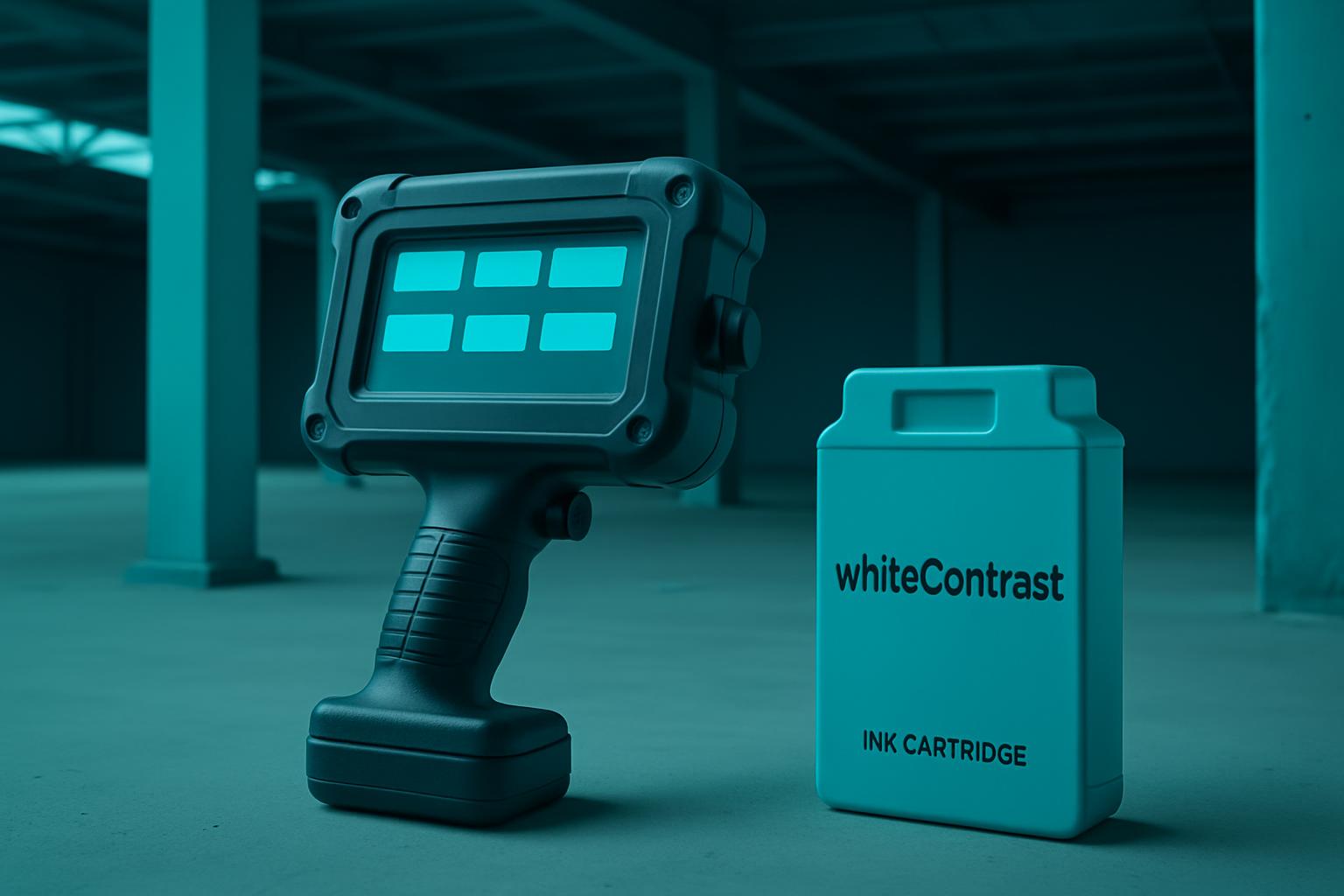
White Contrast cartridges let your handheld printer lay down a crisp, high-contrast white mark on dark surfaces. If you need your codes, batch numbers or labels to stand out on black cartons, painted steel, or tarred crates, this is the cartridge we reach for on the bench. It is made for yards, workshops and mobile teams who need a mark that shows up in poor lighting, or when black or blue would vanish. Logistics teams in Germiston, steel yards in Durban and mobile mark-up crews in Gqeberha all pick this for its clarity.
If your line runs on light or uncoated surfaces, or you print only on white board, White Contrast is not the most sensible fit. For those, check Black Fast-Dry or Water Clean for clean, no-fuss marks. But if your crates or beams run dark, or your marks have to survive a ride in the back of a bakkie down a potholed road, White Contrast is worth the extra handling.
South African yards and warehouses demand more than just colour. Highveld sun fades weak inks, coastal humidity dulls ordinary marks, and steel or timber needs a formula that will hold until delivery. Our White Contrast ink is engineered to stick to rough or coated surfaces with less ghosting than thin solvents. Even on oily yard steel or chilled produce cartons, the right prep gives a brighter, lasting result. Wipe the print area before coding and log your lot on the bay card. In Gauteng, always store upright and keep out of the midday sun.
If your shifts change mid-task or a power cut interrupts, make sure to reseat or swap cartridges properly. For mixed fleets or mobile units in vans, keep boxes sorted, outdoor UV inks apart from indoor stock, promo colours away from your daily use packs. Swapping to or from White Contrast? Clean the print head first for the sharpest impression.
A packer in Polokwane is loading cartons of automotive spares into warehouse racks. Standard black ink gets lost on the supplier’s new dark kraft boxes. The foreman loads White Contrast into the handheld coders, wipes each box surface, and prints the batch number and date. The mark is clear enough for barcode scans, even under warehouse lighting. When the day ends, the operator logs the lot, wipes the cartridge head, and stores it upright out of direct sun. A quick check the next morning shows every code is still crisp, no smears, no fading.
If any mark looks weak or streaked, the team photographs the substrate and sends the image with the device they used. We reply from Midrand with guidance or options for a swap or tweak. This stops guessing and keeps lines running without wasted cartons.
A photo tells us more than a colour name or a brochure swatch. If you are testing White Contrast or planning a swap, have these details ready before using our contact form. The operator or foreman should include anything unusual about the shift, weather, or pack.
If you want to demo a swap in person, bring a sample carton, steel panel or board offcut to our showroom. That way, we can get you a real, working sample and practical advice for your own field conditions.
White Contrast is forgiving, but a few habits keep the mark strong. Never leave a half-seated cartridge in a shared unit, as the next shift may find a dried or streaky head. Always clean between colour swaps to avoid ghosting or palette mix. Store cartridges upright, and keep outdoor and indoor packs separated on the shelf, especially in Gauteng summers or Cape Town damp.
If you swap in a rush mid-load or forget to log the change, you risk mismatched marks or lost traceability. Finish any open cartridge swap before starting a new print run, especially during a power cut or shift handovers. Our Cartridges page lists packs for oil, cold, soft films, promo or UV, pick the right one for each batch.
Verified Google reviews