Cartridge
Black Fast-Dry keeps everyday marks sharp on cartons, crates, and outer packs. Reliable print for warehouses, mobile teams, and anyone who needs a mark to last the trip.
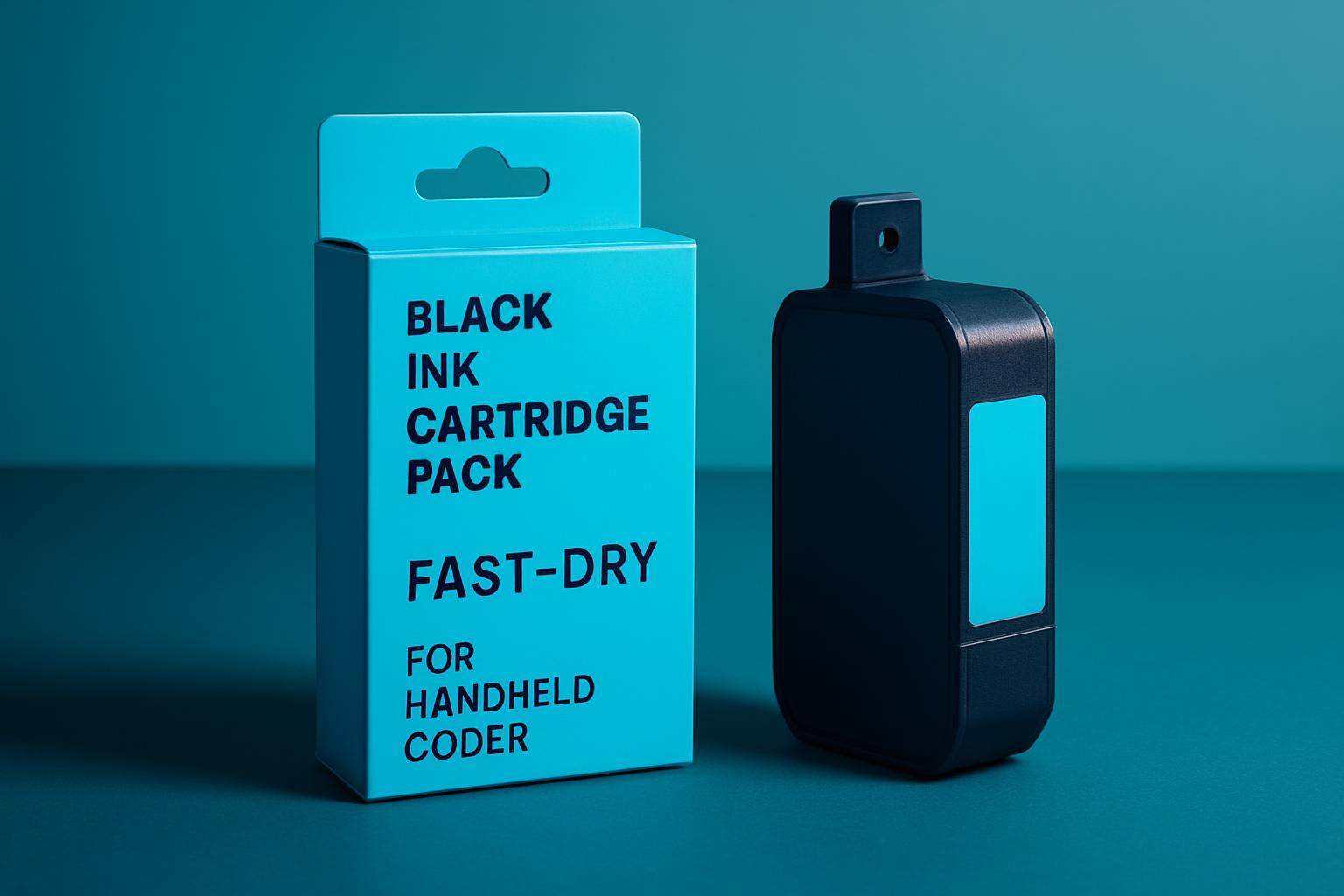
Black Fast-Dry is the default pick for most warehouses, packers, and mobile dispatch teams who need crisp codes on regular cartons and crates. This cartridge fits our common handheld units, ready to print batch info or tracking marks where the line or a fixed coder cannot reach. Its ink dries fast enough to handle most Gauteng floor shifts or Cape Town dispatch bays without smearing, even when the next box comes quick. If you're used to weaker marks that rub off in the bakkie before they even reach the loading zone, this cartridge is a quick upgrade without a fuss.
Black Fast-Dry is best for operators marking plain cartons, corrugated outer packs, export crates and many types of brown and white box board. It handles standard South African supply chains from the warehouse to the truck, and covers most general jobs in municipal storerooms or private goods yards. However, it is not your friend for plastic film, oily or greasy packs, timber with deep grain, or cold packs in chilled storage. Outdoor stacks facing Highveld sun or coastal drizzle need purpose-made inks instead. If your jobs include film, timber or metal, check Soft Film, Wood Pigment, or Oil Tolerant for better substrate matches.
The cartridge slots into compatible handheld coders, no tools, no special programme just to swap. Once seated, it prints sharp, fast-drying black marks that stick well to ordinary board cartons. On a busy floor, the operator can shift between boxes and shelf-ready packs without slowing the run or losing marks to dampness. The ink holds up on cartons through a ride down De Villiers Graaff or the N1 into Polokwane, even with a few bumps. The big trick is to keep the print head clean, especially when swapping from another colour or after an oilier job. A clean start means less downtime and fewer half-marks.
To help us match your needs, we suggest sending a sample photo of the actual carton, crate or substrate you want to mark. Guesswork from a swatch or catalogue photo never beats seeing the real board. Tell us what city you’re in, which device you're using, and if you share code units across shifts or lines. Mention if your jobs mix warehouse and outdoor packs, the wrong ink on outdoor cartons usually means a faded mark before the week is out. For mixed fleets or shared shelves, say which other Handy units run at your site. If it’s a new line or SKU, let us know early so we can confirm pack sizes and delivery.
Most wasted ink comes from leaving a half-swapped cartridge loose or not logging swaps between shifts. Always finish a cartridge swap before a power cut, and never start a new template programme with an unseated head. Store cartridges upright out of direct sunlight, Highveld UV wrecks shelf life. Wipe the print head with a lint-free cloth (not a finger) before and after a colour change. Keep outdoor and indoor packs apart so no one grabs the wrong ink in a rush. If you forget to log the swap, it’s likely Ronesh Reddy will be on your case after a missed mark or a mysterious empty pack. Spare nozzle tips and seals are available, but they're not a substitute for using the correct ink for each job.
For face-to-face demos or to see a swap in action, book a slot during showroom hours and bring your sample carton or board. Most queries get answered from our Midrand coding bay. For any supply questions, send a message through our contact form. We are happy to help match the ink to your South African pack, and to your shift routine.
Verified Google reviews