06 Aug 2026
Export pallet band height keeps your freight codes readable on the floor, at the crate, and from a forklift. This write-up covers what to check, what to avoid, and how to keep shift handovers crisp.
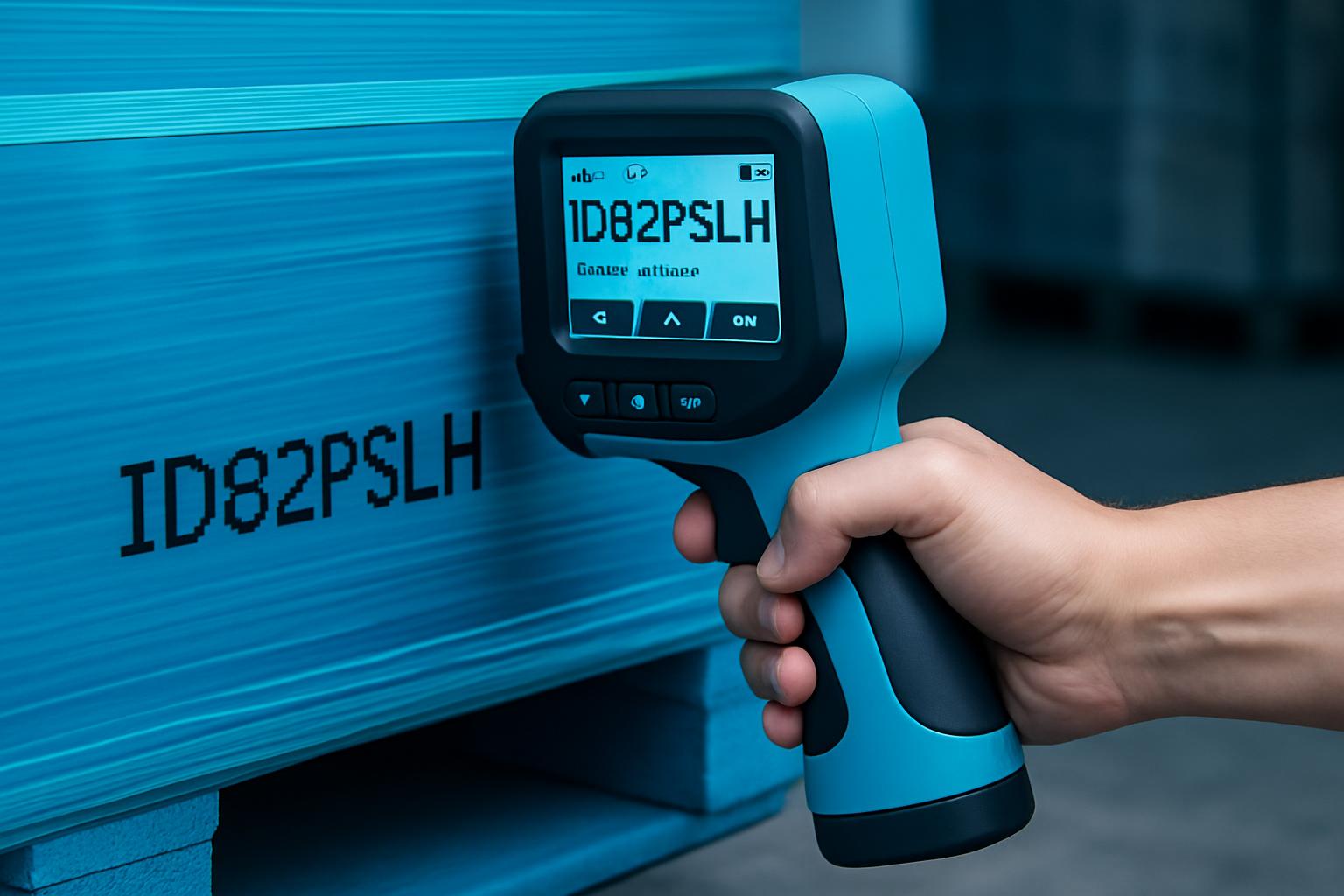
Export pallet band height is the vertical position of a printed code, usually on shrink or stretch wrap, drum bands, or crate stripes. On South African floors, this band needs to be readable by everyone moving the load, not just the original coder. This is not a catalogue standard, but a practical measure for teams working in busy export, agriculture or industrial yards. When band codes are too low, mud, wrap folds or spillages cover them. Too high, and a forklift operator misses the mark while loading for Gqeberha or Polokwane. The right band keeps handlers, inspectors and customs aligned, with less rework or lost time.
If you use handheld printers like the CrateCode XL, and your crates or pallets cross regional or borders, band height matters. It suits teams who work with shifting substrates, split loads, and changing box sizes where a fixed print head cannot reach all sides. If you run only a static production line or code for local stores using pre-set jigs, you can skip most of this. Static lines with repeat box profiles do not need to manage export band height as tightly, but mixed crate floors and mobile packing bays do.
Morning shift starts with confirming the day’s substrate, then checking the cartridge matches both the material and weather. On the Highveld, dust settles fast on nozzle tips, so even a two-hour window can cloud a mark. In coastal zones like Durban, morning wraps pick up condensation, which smears water-based inks if the wrong cartridge is loaded. With most export loads, the team walks the bay, chooses a readable height (usually one that works for both the operator on foot and the forklift operator), and does a test print. The first good mark is photographed and logged with the substrate and cartridge details. When the Isando export yard is busy, every minute counts, so any template or field issue must be logged before break to avoid repeating the whole run.
A Gauteng export team receives a sudden change in outer carton, supplier switched to a softer substrate, but nobody wrote it down in the morning brief. The coding lead grabs the CrateCode XL, checks the new substrate, swaps to a high-contrast cartridge, and sets the band print height just above the pallet wrap midpoint, readable from a forklift. She prints, photographs the first clear code and logs it with the shift date. At handover, she preps one line for the next lead: “New wrap, mid-band print, black XL, see photo in folder Wed AM.” She checks that the spare cartridge pack is ready before break. If the sun shifts and the band is now in glare, they log the exception and adjust height for the next batch. This keeps the team ready for an unplanned SARS walk-in or new export bay check.
Before you email, gather your details so we can answer in one round. Attach a photo of the mark on the latest wrap, state your cartridge type, and note the target band height if possible. If you are running dual substrate or facing a new carton, include a shot of the raw material. Mention if you have seen issues with UV, condensation, or band drift after loading. This helps us match your situation to known fixes or cartridge swaps. A clear photo of the pallet band and a short note confirm the solution, whether you sit in Midrand, Bloemfontein, or on the N2 corridor.
Band height only works if every operator knows the chosen level and does not invent a new field mid-shift, especially when a sample arrives unannounced. Beware of drifting band position when cartridge swaps do not match the first template. Highveld dust or coastal humidity can either clog or smear depending on the ink type, so check with the cartridge field checklist before starting the run. Do not leave shifts undocumented, each first good mark should be logged, not only for quality but for shift handover. Keep spare packs close and avoid compressing checks so tightly during a power cut that you skip the log. For more habits, see our first good mark photo habit guide.
Verified Google reviews