30 Jun 2026
Showroom sample cards are floor notes for your team’s actual morning, not theory. Use what works for South African lines, carton changes, and quick handoffs in real shift conditions.
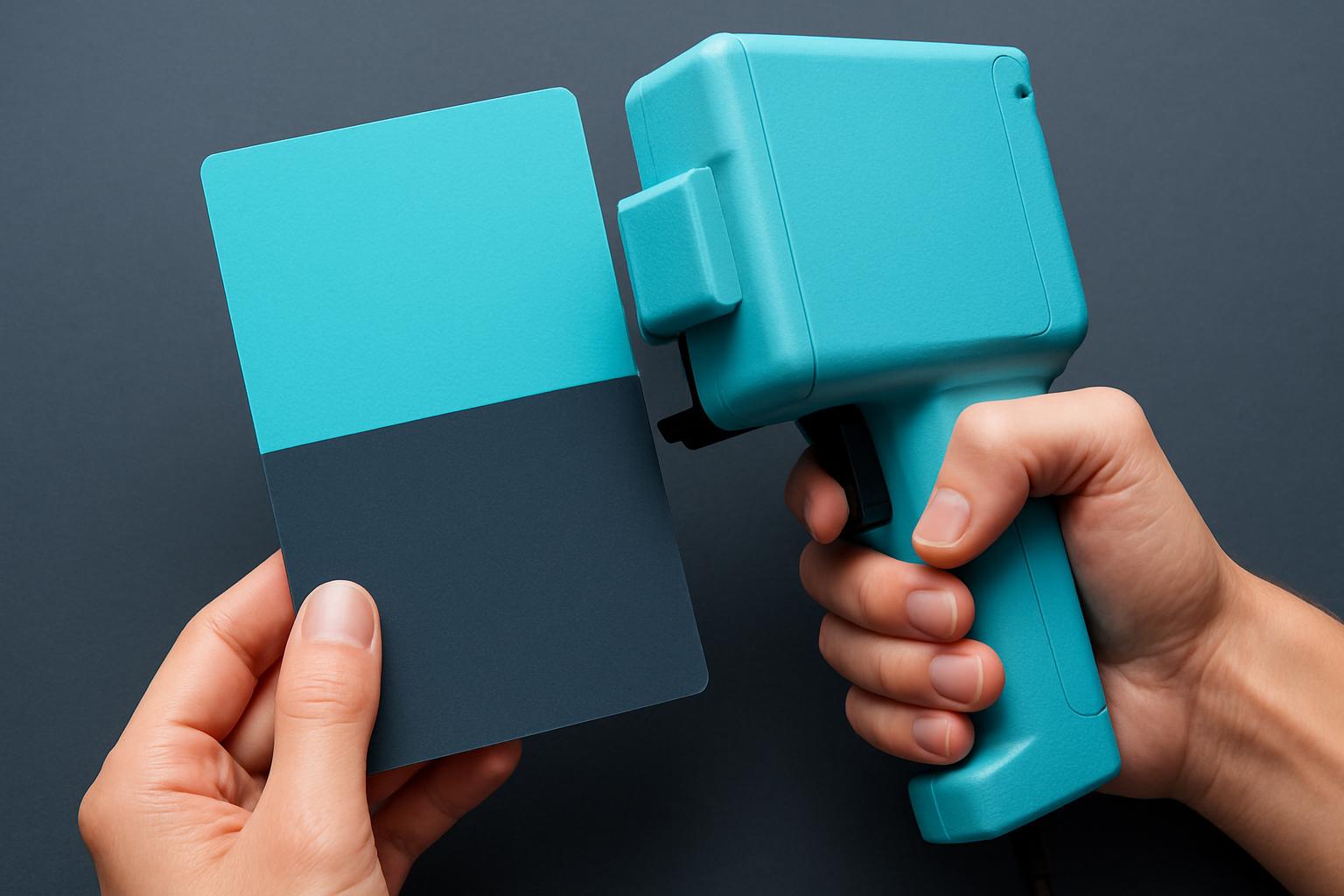
Showroom sample cards are quick-reference job aids, written for coding leads, operators, and packers who run handheld printers daily. They offer repeatable language and steps to help your team avoid mishaps caused by missed carton changes, substrate swaps, or forgotten mark checks when you are pressed for time. These cards are not suited for buyers looking at broad overviews or spec sheets. Instead, they guide crews who already own and use a handheld unit, whether in a Gauteng warehouse, a Durban crate yard, or a Cape Town dispatch bay. If you are still comparing devices, we recommend starting on the Devices page for full product context.
A sample card fits on the floor, not just in a visitor’s hand. Each one covers real steps for a specific walk: confirming substrate, swapping cartridges, logging first-good marks, and handling template exceptions. On shift, your team reads the sample card once, then follows a short checklist, removing guesswork when a delivery bay gets crowded or the power dips. If a power cut cuts a session short, the checklist on the card lets you compress all critical checks into one power window. Sample cards travel well, working in everything from cold rooms to open-air farm packs. If conditions shift suddenly, like a carton change nobody marked down or condensation in the cold store, the right card helps you recover without having to call someone off another aisle.
During a recent demo in Clearwater, Onalenna pinned up the sample card before the morning’s test run. The team confirmed substrates: corrugated cartons, then swapped to plastic wrap. Cartridge slot was checked and barcodes printed on both surfaces. The first mark was photographed with the shift date. When a surprise delivery brought a milk carton, Onalenna resisted the urge to invent a new field mid-shift, instead, they logged the exception, finished the first batch cleanly, and included a photo in the shift report. Using the sample card, the handoff to the afternoon lead was one sentence: 'Milk carton sample logged, barcode clear at 2-metre check.' No marks lost, and no confusion before lunch.
Before you send a message through our contact form for advice or to request a sample card for your shift, gather a few details. This saves time and helps us give you precise, workable answers. Your message should list which substrates you are marking (for example, carton, shrink wrap, aluminium, or pipe), which handheld model is in use, and any recent issues, such as smudging, unreadable marks, or swapped cartons during the shift. If you have photos of a first-good mark (or where a mark drifted), attach them. Any field notes on condensation, dust, or UV fade during your actual walk will help us tailor advice that matches your exact bay or room.
If your field involves regular changes, like pallet banding for export, or running multi-colour promotions, mention this in your email. It lets us recommend which additional cards or field checklists pair best with your workflow.
Teams sometimes skip the sample card on days when everything seems familiar, until a new carton arrives or a power-cut window shrinks the available power. Common pitfalls include inventing a second field mid-shift when unplanned stock lands, forgetting to photograph the first good mark, or failing to check spare cartridge packs before opening the aisle. Coastal yards often see water-based marks smudged by humidity, while operators on the Highveld forget how quickly dust can clog a nozzle tip. Export handlers in Isando may misread band height if bay cards are missing.
To avoid these issues, build the card’s checklist into your daily routine, especially on shift change or outside main office hours. If a new substrate or workflow is coming up, review the relevant note in Codes notes or visit Cartridges for pairing tips. For unusual yard or export cases, look at export pallet band height or cold room condensation habits before your next batch.
Verified Google reviews