
10 Apr 2026
Power-cut restart cards help coding leads remember critical steps when power returns in the middle of a marking walk. This is practical guidance for avoiding costly shift gaps.
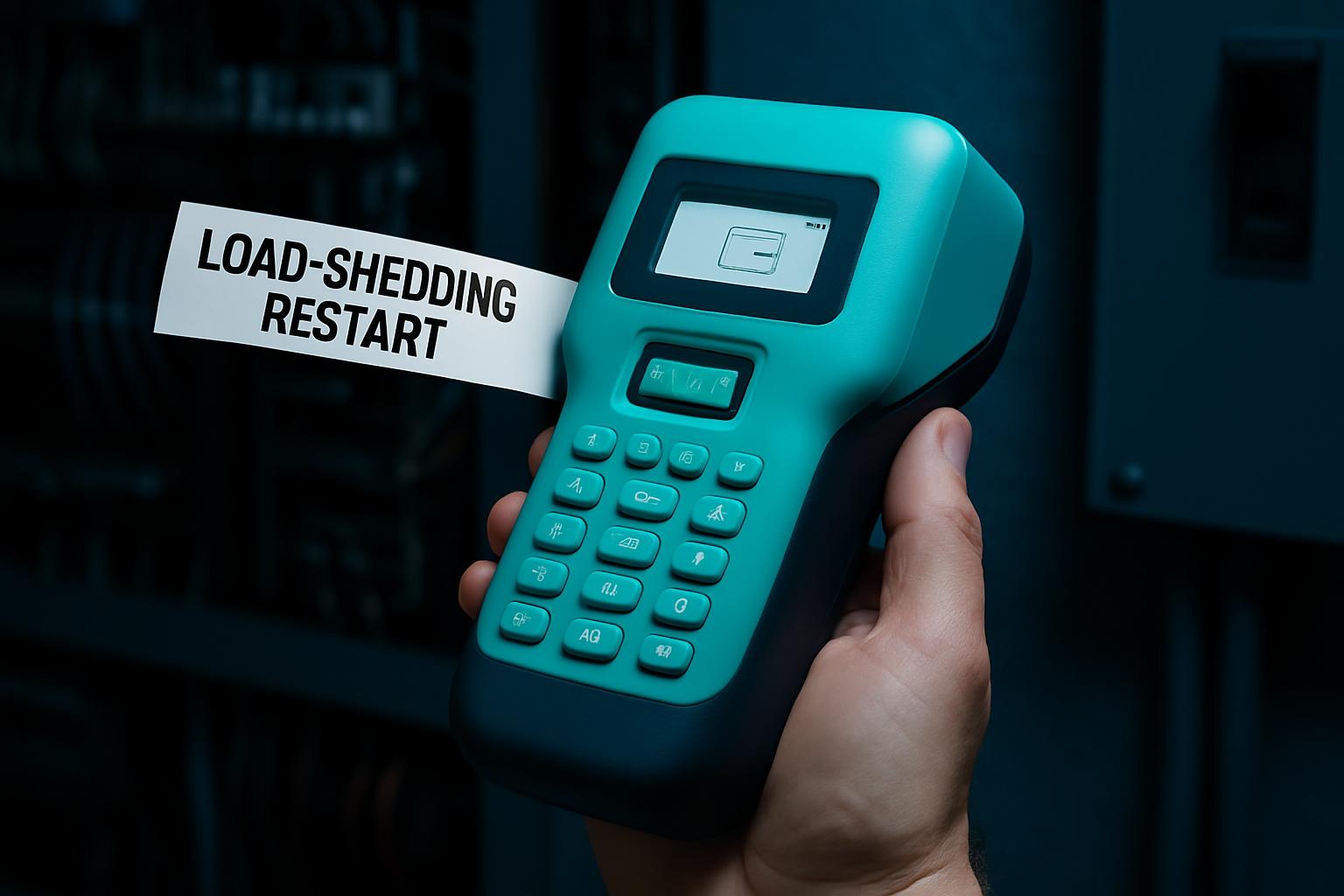
Restart cards are practical reference notes for coding leads and operators handling handheld coders in warehouses, packing sheds, or crate yards. When a power cut interrupts a shift, these cards help you reset your checks as soon as the power returns. The language is made for real crews, not boardrooms or slide decks. If your site runs on fixed coders without interruptions, or you always have a coding specialist on call, you may not need restart cards. For everyone else facing municipal power cuts or rural outages, they keep the walk on track even if the morning drifts off plan.
On Gauteng floors, Highveld dust can settle quickly on nozzle tips during a blackout, leading to early cartridge failures if not checked. In coastal regions, humidity after a power cut means water-based marks can smear unless cartridges are matched carefully. Export teams at Isando know afternoon outages can disrupt carton changes and cause mistakes if the substrate or template is not verified again once lights are back. Restart cards let you check the essentials before the next bakkie leaves or a freight handler steps in. They work best for teams who already know their devices and have walked a South African yard, especially where shifts are short and the first good mark must be captured fast.
A restart card prompts you to complete the three checks that matter: confirm the substrate or target is still the same, confirm the correct cartridge is loaded, and store a photo of the first good mark with the date and bay info. This is not a full training programme. It is a quick walk that can be repeated at 06:00 or in the shade of a Durban crate stack before the next load. If there is any outdoor UV exposure, it is up to the yard lead and operator to walk the sun path and confirm marks will last through transport. In cold stores, the wipe tip and template load are separated to prevent condensation ruining the cartridge or blurring codes.
Picture a Polokwane fruit packhouse during a mid-morning power cuts. The coding operator loses power halfway through a line of export cartons. Once the lights and line restart, the operator grabs the restart card, confirms the crate substrate (nothing swapped), checks the cartridge did not dry during the gap, and photographs the first legible print. Carton exceptions are logged in a single line in the paper record. A quick handoff note is prepped for the next lead, and the spare ink pack is pulled out before the truck rolls. The shift is back on track without guesswork. If you operate in a pharma room or a high-turnover export yard, use matching restart guidance from template lock for pharma lots or export pallet band height.
Before writing to us through our contact form for restart card samples or advice, make a note of your typical substrates, the cartridges you keep on hand, and which step usually causes the most confusion when power returns. If your team changes carton styles often or operators work outdoors in Highveld dust or coastal humidity, highlight this in your message. The most common pitfall is skipping a check or inventing a new test mid-shift, especially if someone hands over a sample carton without flagging it on the walk card. Another trap is letting decorative or promo marking distract from the core restart routine. Keep the checklist short, specific, and ready to hand off.
Verified Google reviews