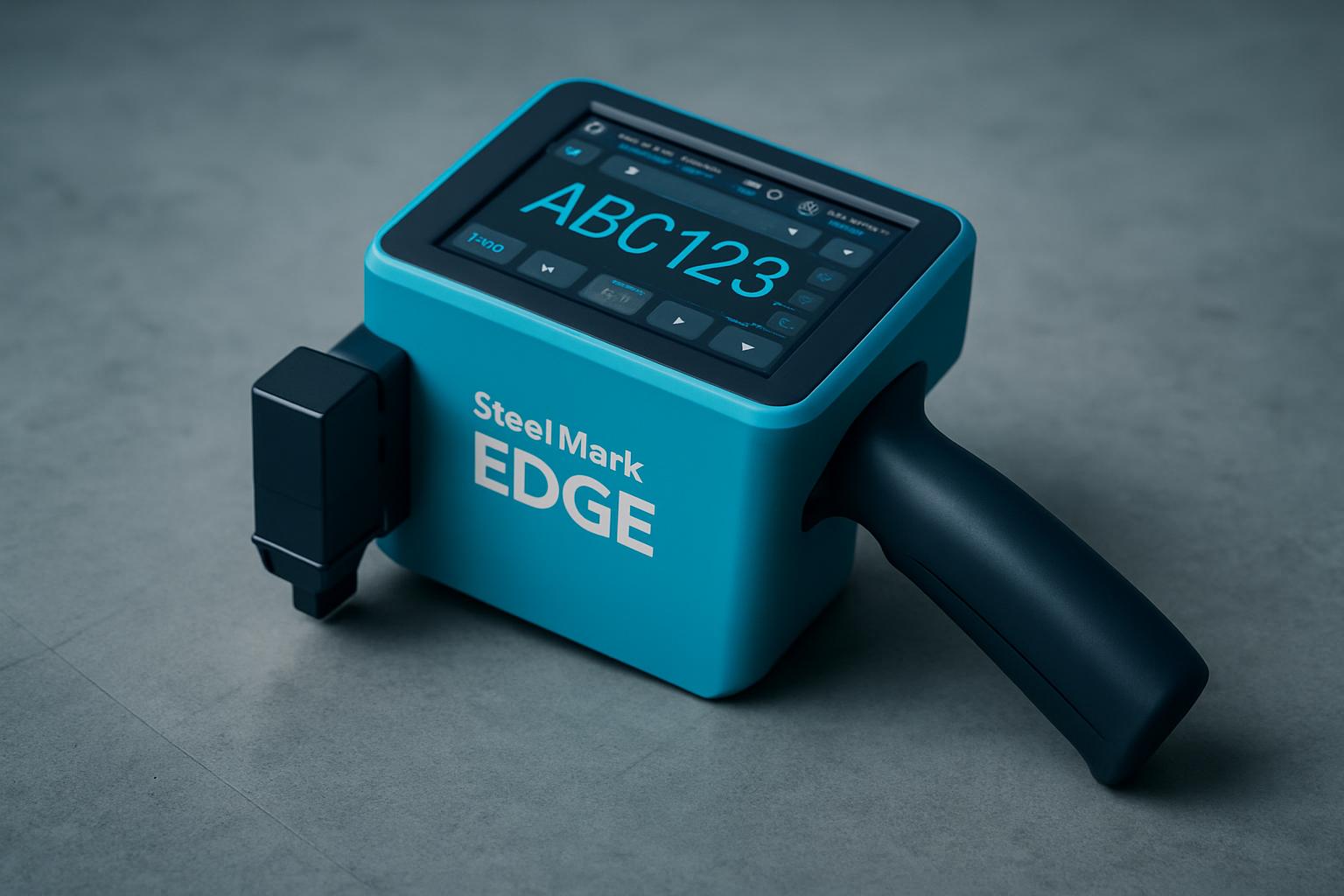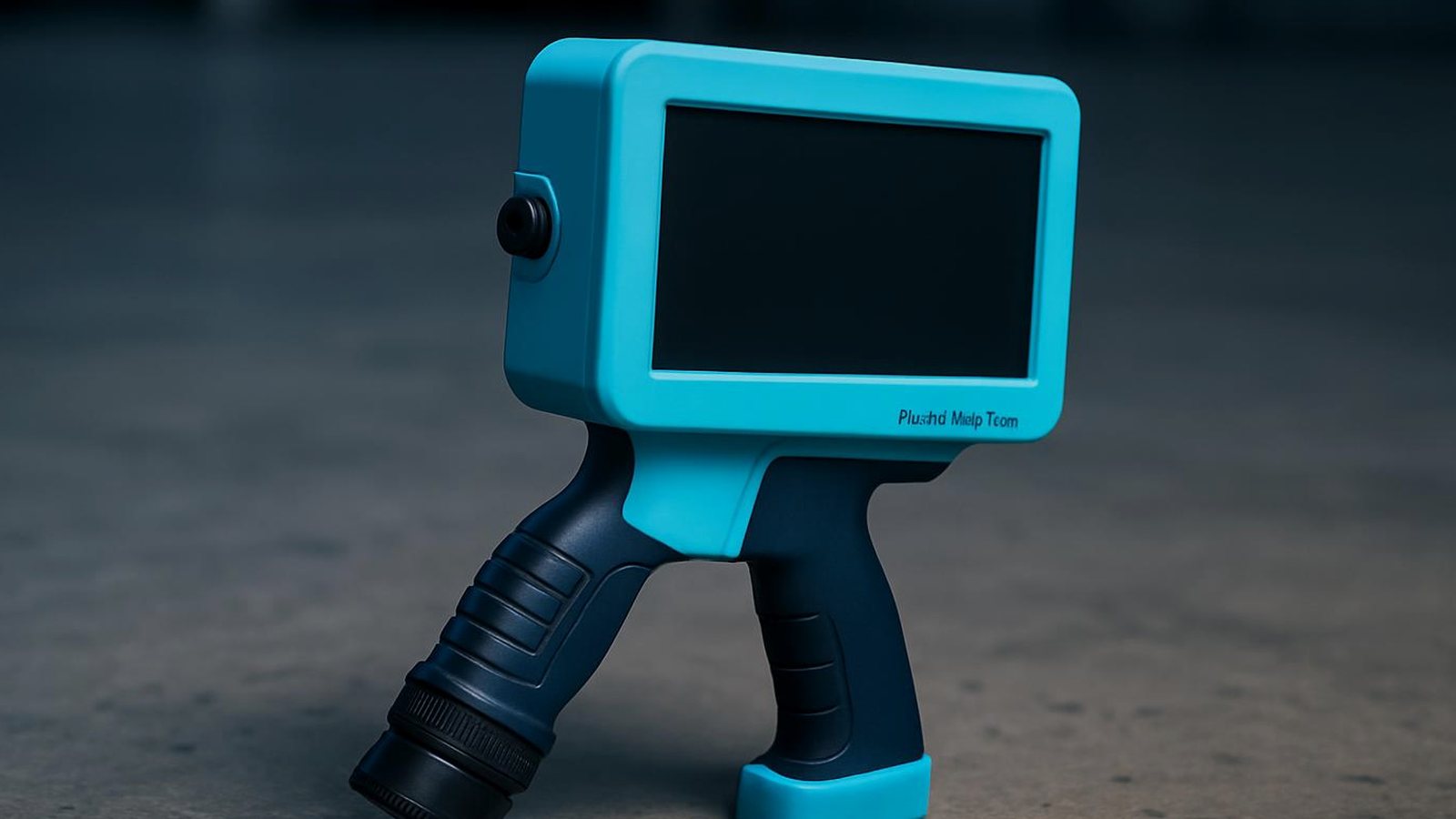
SteelMark Edge is a handheld coder for marking steel, aluminium, brackets, pipe, and oily or coated parts. Unlike a fixed line printer, it travels to your load bay or storage aisle and prints directly onto rough, greasy, or cold surfaces. The tip and cartridge are built for hard knocks, quick changes and South African conditions, from Highveld summer heat and dust to a coastal dew point. Every device arrives with a clear use note, so even if you swap operators after tea break, the print stays the same.
If your main job is marking cartons, timber, or soft film, FieldPath Mini or MarkMate Go may be the better fit. SteelMark Edge does its best work on parts and pipe where oil, rust, or weld scale rule out ordinary ink. It suits workshop teams, metal yards, pipe stores, and mobile repair units. If your substrates are all clean, flat, and dry, look at the main Devices range for lighter options.
On a typical Johannesburg or Durban shift, the operator collects SteelMark Edge from the bay, checks the substrate - steel ends, oily brackets, or galvanised profiles - and scans the short card for template and ink pairing. The first good mark is photographed at the start of the run, on a phone or the old digital camera, and pinned to the shift group or up on the wall. This is not a formality: it gives you a real reference if the line halts, if there’s a complaint about a mark smearing, or if you need to swap operators before the next bakkie leaves.
Changing to a new cartridge or print template takes minutes, not hours. We pack every device with a check card and a care note, so your team does not have to read a forty-page manual or chase missing tips. If you need to code at a loading dock, a cold store, or between crates in a Polokwane yard, SteelMark Edge keeps the mark legible at the pace your crew actually moves.
SteelMark Edge is best when you have oily, rough, or irregular steel to code and the fixed coder on the line can’t reach every item before dispatch. It is for teams who need honest marks that do not rub off, and do not have the luxury of a controlled print room or line-side power. Conditions like power cuts, Highveld wind, or coastal damp are nothing new for this tool.
If you are batch coding shrink-wrapped product, light cartons, or anything with a soft, smooth finish, you may want to consider InkCell Soft or a lighter alternative from the Devices list. It is not the best fit for fine, high-speed lot coding or box work in dry, climate-controlled stores. If you are not sure, send us a mail with the substrate details and we will point you to the right tool.
A Gauteng steel yard handles 3-metre pipe lengths, with oily ends and rough surfaces. The loader calls for quick batch marks before a truck leaves for Bloemfontein. The operator takes SteelMark Edge, matches the ink cartridge to the oil type, and runs a test mark. Using the care card, they check pressure and template settings. The first mark is photographed and sent to the supervisor’s phone. When pipe diameters change mid-morning, the operator swaps out the cartridge for a wider font template, using instructions pinned in the bay. There is no stoppage, and every batch leaves with a legible mark, even if rain hits or the container sits in a humid siding. The foreman keeps a spare Care & Spares Kit at hand for quick tip changes.
When you are ready to ask about SteelMark Edge, a message through our contact form makes all the difference. The right information upfront means we can match the coder, ink, and templates for your specific shift, not just send a generic quote. Photos and field notes beat a long phone call every time.
Use the checklist below to save time and get your answer in one round.
The biggest pitfall with handheld coding on steel and oily parts is using the wrong ink or rushing the first mark. It is tempting to let the new operator run before taking a photo of the first good sample - but that step saves hours if something goes wrong mid-shift. Swapping cartridges between oily and dry surfaces without cleaning the tip will smear your code. Always check the care note and keep a spare tip in your tool pack. Forgotten template settings or skipping the walk speed check are main causes of faded or patchy marks.
If you find steel is only a small part of your business, or you often have to code mixed materials, ask us how FieldPath Mini or MarkMate Pro stacks up. For any odd jobs, our Cartridges page gives the details on ink types that suit South African weather. Questions are welcome, send a message through our contact form and we will help find the right match before your next batch leaves.
| Ink / cartridge | Oil-tolerant industrial ink |
|---|---|
| Print / walk | 12.7 mm · curved surface assist |
| Power | Workshop pack · glove trigger |
Verified Google reviews