22 Aug 2026
Returnable crate marking needs codes that survive repeated washing, loading and scanning. Here we lay out how South African teams keep marks readable and workflows simple.
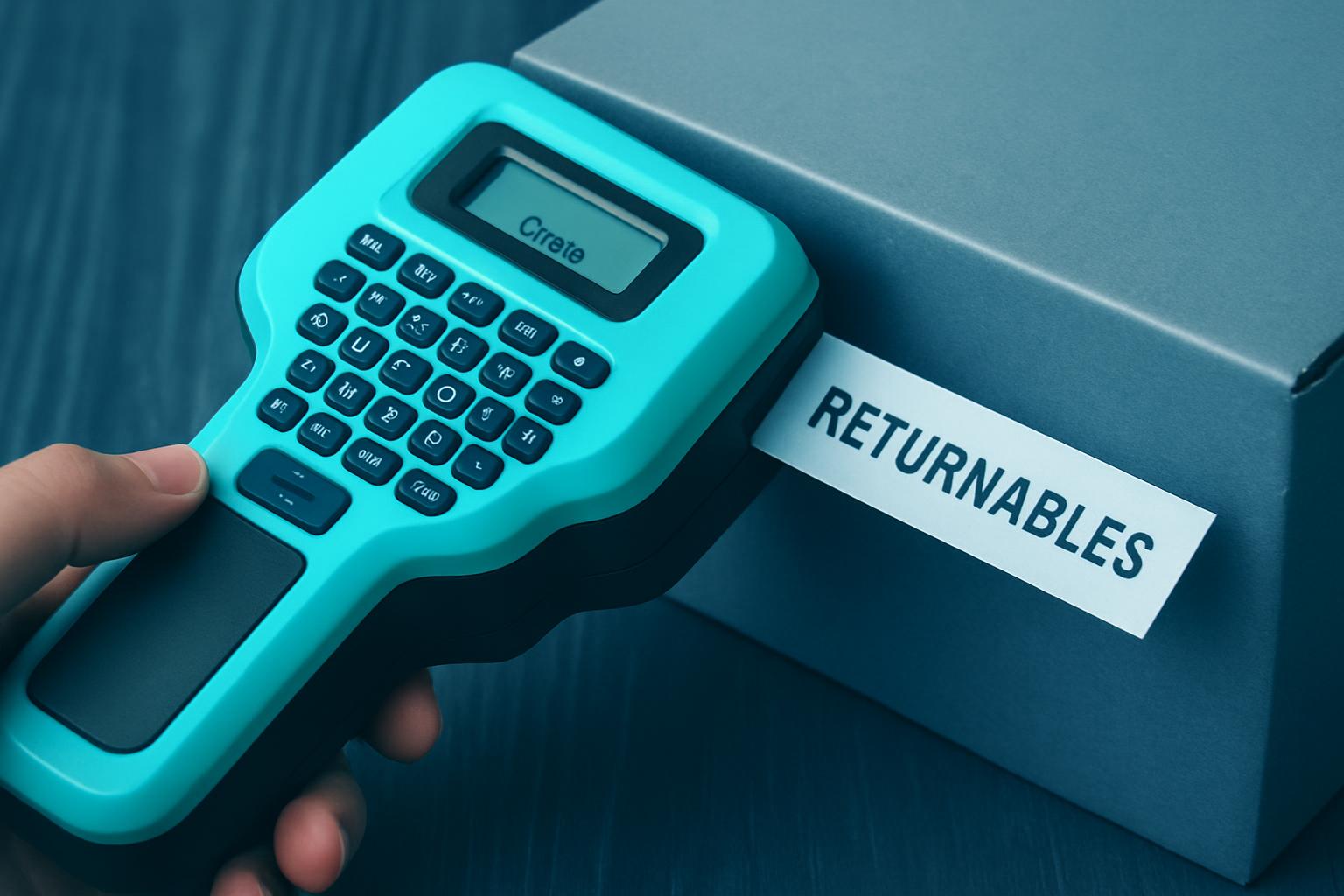
Returnable crates move from suppliers to retailers and back, carrying dairy, fruit, vegetables or pharma stock across Gauteng, coastal cities and inland yards. Each crate needs a mark that survives the loop, outdoor sun, cold stores, crate washers, and local handling from bakkie trips to forklift lifts. When a fixed coder cannot reach every surface in the queue, a handheld printer steps in. Most South African loops use a mix of plastic crates, aluminium frames or polymer bins, each with different surface quirks. Coders on the early shift do not have time for theory; they want the code to scan after three washes and a trip down the N1.
Handheld marking fits makers, packers, and field crews who deal with constantly moving stock or crates that never all land in the same yard twice. Dairy and fresh produce loops benefit most: the crate must come back but the mark must stay on until it is scanned or washed off at the next depot. If you run a fixed-fill line with in-house crates, or wash cycles are tightly controlled by one QA team, other tools might suit you better. Our notes help operators who handle daily substrate changes or see crate types swap midweek, not those with a single crate SKU and fixed marking gear.
On a typical morning in Midrand, the operator starts with the shift card showing crate type and day’s route. They check substrate, polymer or plastic, then fit the right cartridge, usually solvent for crates that will get washed. First, they print a date mark on a sample crate, photograph the mark (including the shift date), and save it on the shop’s shared folder. If a power cut interrupts, the team compresses the cartridge swap and template load into one window, rather than hoping for a second slot later. Any template or mark exception is logged in one line before lunch. Before crates move to dispatch, the handoff note is ready for the next team lead. Highveld dust gets wiped from nozzles, and if cartons changed, this is noted on the checklist. You can see more practical habits like this in the first good mark photo routine.
Before you contact our team at our contact form, have your crate material, typical wash cycle details and the age of an old mark ready. If your operation covers multiple crate types, note which cartridges and templates you have on hand, and how outdoor UV or cold store humidity affects your shift. Prepare a one-line summary of any recent substrate or process change that changed your scrap or scan rate. If your crates move between Gauteng and Durban, add if you see different mark failures under coastal humidity compared to inland dust. This lets us give you a straight answer.
Teams often lose traceability because the cartridge swap gets missed when a new crate shows up. Water-based ink smears in coastal yards, especially in Durban or Gqeberha, while solvent inks may be wasted if high-pressure washers strip them off too soon. UV exposure fades some marks by midweek, see UV cartridge notes here for details. When a power cut cuts the shift short, operators often forget to save the first good mark photo or skip logging an exception, which makes later tracebacks harder. Finally, some crews invent new field codes without updating the template, causing extra mistakes and lost time.
If you are new to handheld crate coding, start with our devices overview and return here once you have a working mark routine. For more site-specific advice, see coastal damp carton marks, shared handheld use in courier hubs, or font size tips for crates. We keep our code notes geared to shift leads and site operators who need to transfer knowledge at 6am, not just managers. For tailored help, send a message through our contact form with your details.
Verified Google reviews