24 Jul 2026
Highveld UV ink is made for mobile coders working under sun and dust. Get the right info for solid crate marks that do not fade by Friday shift.
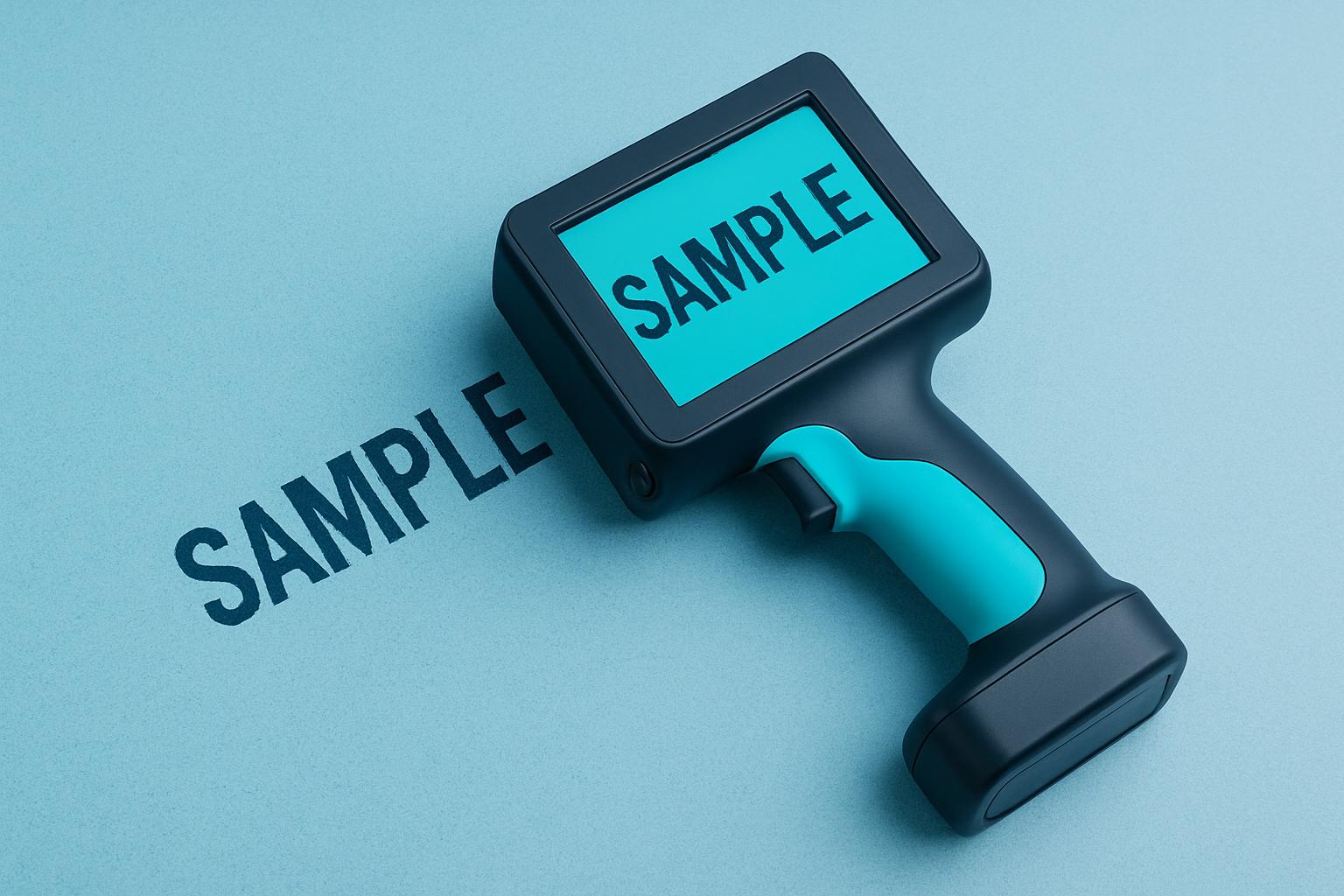
Highveld UV ink is a cartridge option for handheld printers where cartons, crates, or farm produce move outdoors. It stands up to direct Gauteng sun, dry air, and wind-borne grit that shortens the life of standard inks. UV ink suits operators and leads who run marks on timber, plastic, or coated cartons that face outdoor dispatch, whether in the back of a bakkie or a municipal yard. If your floor faces Highveld dry season, open air trailer bays, or warehouses where product sits in sun before the truck leaves, this cartridge fits. The Codes notes section collects similar details for other local situations. It does not suit cold rooms or print rooms relying on water-based marks, see coastal damp carton marks for those cases.
In the field, UV ink holds its colour week after week when sun or dust would usually wipe out a date code or batch number. The cartridge swaps into most portable coders in under a minute. Once loaded, the operator takes a sample mark on the same substrate planned for the line, timber, carton, or plastic, and confirms it stays readable after a few minutes in early sun. The ink’s quick cure avoids smears if your mark must roll straight onto a flatbed or stack. A photo log of first marks each morning helps when QA queries a shipment or an export crate needs proof of mark for paperwork. For pharma rooms, see template lock for pharma lots for template habits that keep UV marks quiet and consistent.
If you dispatch from Midrand, Isando, or Germiston, dust and variable light inside open-air sheds are common. Outdoor crate yards in Bloemfontein and Polokwane, or rural packhouses on the N12, find UV ink essential for legible codes that survive field conditions. In contrast, if your marks live in temperature-controlled rooms or if product never leaves under sun, a water-based or pigment ink may work better (see cartridges).
A morning shift in an Isando crate yard starts with a walk: the operator checks the day’s substrate (mainly coated cartons) and confirms the UV ink cartridge is loaded. The field lead takes a photo of the first clear, sun-resistant code, logs it with shift date and crate type, and stores it in the local quality folder. Late morning, a new carton sample arrives, rather than change process mid-walk, the lead notes the exception and holds for a planned test later. At lunch, exceptions are logged in one line: 'New carton sample, not UV-tested, marked for later check.' Before the next shift, spare cartridges and templates are checked and prepped as power windows may tighten if a power cut hits. By end of shift, all marks are accounted for, and the next operator can pick up with a clear handover.
A repeatable process keeps UV marks reliable in outdoor conditions. Use this checklist before and during your shift to cut copy errors, missed substrates, and sun-faded marks.
Before you send us a message through our contact form, check which substrate and mark location you need help with. If an outdoor mark has faded or gone missing, say how long it was outside and in what sun. List the batch size, typical dispatch window, and any recent changes (such as a new carton or dispatch lane). If condensation or humidity is a problem, mention the storage and dispatch conditions. Short notes on the site, such as a Polokwane farm crate, a Germiston pallet or a Midrand open yard, help us check cartridge and template fit. See also nozzle care in a loud week and first good mark photo habit if you need to brush up pre-shift habits.
The main pitfall is stretching cartridges past their sun-resistant window or using indoor ink for outdoor marks. Dust build-up on the nozzle can cause skip lines, see nozzle care. Changing substrate mid-shift without logging leads to missing marks in the quality record. Only use UV ink on substrates that truly see outdoor sun, as the cost per mark can add up if used broadly inside. Never swap field templates without logging, especially during a power cut, as cross-template marks are hard to trace. If you spot a faded mark or a wet smear after rain, email the team with the substrate and the date the mark was made.
Verified Google reviews